
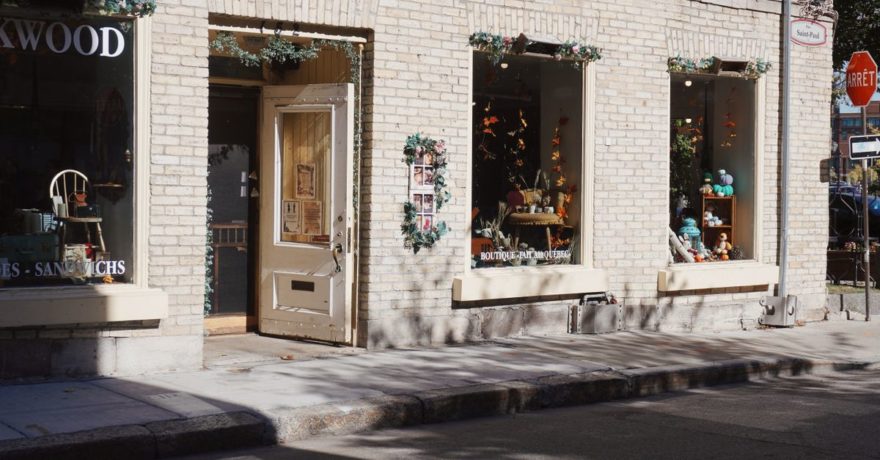
The best Small Business Saturday ads make a local business easy to choose. They show what is distinctive about the shop or service, give nearby customers a clear reason to visit or buy, and state exactly when and where the offer applies. A specific product, an inviting in-store experience, or a useful service can be more compelling than a generic holiday discount.
For a local brand, the practical formula is simple: choose one worthwhile offer, lead with a genuine local advantage, match the message to the placement, and send people to a page or destination where they can act. If the campaign needs display ads in several dimensions, SizeIM can help a small team or agency build one responsive ad design and generate the required sizes without manually rebuilding each banner.
That production step matters, but it comes after the strategy. A perfectly sized ad will not rescue an unclear offer, an incorrect address, or a promotion the business cannot fulfill. Here is how we would plan a campaign that stands out and holds up when customers respond.
What counts as a strong Small Business Saturday ad?
A Small Business Saturday ad is promotional creative intended to bring attention to an independent business during the shopping occasion. It may be a paid display banner, a social post, an email graphic, or an ad in a local publication. The format changes, but the customer’s questions do not: What can I get, why here, and what should I do next?
We use a three-part test when reviewing the message: local relevance, a concrete reason to act, and a friction-free next step. An ad that says only “Support small businesses” expresses a worthy sentiment, but it leaves the shopper to work out what the business sells. “Discover gifts made by local artists. Visit us on Saturday” gives the shopper a clearer reason to pay attention. Add a genuine offer or event only if the business can deliver it.
Standing out does not require an aggressive price cut. A bookstore may highlight staff recommendations, a neighborhood café may promote a special menu, and a repair shop may invite customers to book a consultation. The advantage is specificity. A local business can show real products, real expertise, and a visit worth making.

Start with an offer the business can actually honor
Before writing copy, decide what a customer will receive and what the business wants in return. An offer can drive a purchase, a visit, a booking, or an introduction to the brand. The best choice depends on inventory, staffing, margins, and the way customers normally buy.
Choose the right type of incentive
- Product-led: Feature an item or collection customers cannot easily find elsewhere. This is often a stronger brand message than a broad sale.
- Experience-led: Promote an in-store demonstration, workshop, tasting, or chance to meet the maker, provided the team can host it.
- Value-led: Offer a clearly described bundle, gift with a qualifying purchase, or selected-item discount.
- Convenience-led: Highlight verified Saturday opening hours, collection options, or local delivery if those services are available.
- Service-led: Give customers a direct way to book a consultation or appointment rather than trying to turn an ad into a full sales pitch.
Check the economics before the creative is approved. Account for the cost of the product or service, any discount or free item, fulfillment, staffing, and media spend. If an incentive is limited by quantity, say so clearly and make sure the business can track redemptions. Scarcity should describe a real limit, not manufacture urgency.
Put the qualification where customers can find it. “Free gift with qualifying purchase” needs a visible threshold or a clearly linked page with the full terms. If the offer excludes products, requires a booking, or ends before closing time, disclose that before the customer arrives.
Make the local advantage visible in the creative
Many seasonal ads look interchangeable because they rely on the same gift imagery and broad phrases. A local brand has better material to work with: its storefront, staff, craft, neighborhood, product selection, or approach to service. Choose the detail that would help a nearby customer recognize the business and want to visit.
For example, imagine an independent gift shop with a curated selection from nearby makers. Its ad could lead with “Find gifts made close to home,” show a product the shop actually stocks, name its neighborhood, and invite customers to browse on Saturday. The line works only if the sourcing claim is true. “Locally made” should never be a decorative label applied to products without verification.
The same principle applies to service businesses. A studio might show the person delivering the service and explain what a new customer can book. A restaurant might use a photograph of a dish it plans to serve. Actual product and business photography can give an ad more useful information than a generic seasonal image. Get permission for recognizable people and confirm that any pictured item will be available when the campaign runs.
Do not confuse local relevance with adding a town name to an otherwise generic banner. If the ad says “Shop local in [Town]” but offers no identifiable product, experience, or benefit, the location is doing too much work. Show why this business is a worthwhile local choice.
Write copy that earns its space
A small display unit cannot tell the entire business story. Give the headline one job, make the supporting detail useful, and let the landing page carry the terms. The most effective copy is easy to scan without relying on vague superlatives.
A compact copy structure
- Lead with the reason to care: An exclusive product, useful event, relevant offer, or clear service.
- Add local context: The neighborhood, store location, or delivery area, whichever affects the decision.
- Set the time: Say “Saturday only” only if the offer truly applies for that period. Use the actual date where it prevents confusion.
- Give one next action: “Get directions,” “Browse the collection,” “Book a time,” or “See the menu.”
Consider these illustrative copy patterns, not descriptions of real businesses or offers:
- Independent retailer: “Gifts from local makers. Explore the Saturday collection.”
- Café: “Make a stop in [Neighborhood]. See Saturday’s menu.”
- Service provider: “A local expert for your next project. Book a consultation.”
- Shop with an event: “Meet the makers this Saturday. Plan your visit.”
Notice that each call to action fits the decision. “Shop now” may suit an online storefront, while “Get directions” is more useful when the purpose is an in-person visit. A booking ad should link to a working booking flow, not a general homepage with no obvious next step.
If a message needs a long disclaimer to remain accurate, reconsider whether it belongs in a compact banner. Keep the claim precise, then make complete terms available on the destination page. Our guide to writing display ad copy offers more ways to sharpen a headline without adding clutter.

Build a creative system, not a stack of unrelated ads
The customer may encounter the campaign in an email, a display placement, a social feed, and a shop window. Those pieces should feel connected even when the layouts differ. Use a consistent palette, recognizable typography, the same offer wording, and product imagery that belongs to the business.
SizeIM’s approach is to create one responsive ad design and adapt it into multiple requested display dimensions. Its brand kit management lets teams keep logos, colors, and fonts together, while templates and an editor support the initial design. This makes it a practical starting point for agencies creating display sets for several local clients, each with a distinct identity. The designer still needs to inspect every generated size.
Plan by aspect ratio, not just pixel count
A 300 x 250 rectangle, a 728 x 90 leaderboard, a 320 x 50 mobile leaderboard, and a 300 x 600 half-page unit have different amounts and shapes of usable space. These dimensions appear among SizeIM’s sample ad results, but the actual sizes a campaign needs should come from its media plan. Check the publisher or ad network’s current creative specifications before production.
- Compact horizontal placements: Lead with a short offer or benefit and a clear brand identifier. Do not force detailed terms into a narrow strip.
- Rectangular placements: Give a product image and message enough room to support one another. Avoid making either so large that the call to action disappears.
- Tall placements: Stack information in reading order. A tall canvas is an opportunity to improve hierarchy, not permission to add several unrelated messages.
- Social placements: Design for the specific placement and its current requirements. Do not assume a display banner export can be uploaded unchanged to every social format.
We recommend deciding what is essential before resizing: business identity, offer or benefit, local cue where needed, and next action. If a small unit cannot show all the supporting details legibly, remove secondary copy. Do not solve limited space by shrinking every element until it becomes unreadable. For more layout guidance, see our responsive banner layout patterns.
Separate message variants from size variants
These are different production tasks. A size variant communicates the same offer in a different dimension. A message variant changes the reason to act, such as highlighting a product instead of an in-store event. Start with a small number of meaningful message ideas, then create the required sizes for each approved idea. Otherwise, a team can end up managing a large file set without learning which message resonates.
For example, an agency might propose one concept about discovering locally made goods and another about visiting the shop for a Saturday event. The client approves the concepts and verifies every claim. Only then does the designer adapt each one to the booked placements. That order reduces the chance of changing an offer across numerous finished files.
Choose channels by customer intent
A display ad, a search ad, an email, and a storefront sign have different jobs. The aim is not to publish everywhere. It is to cover the moments when a nearby customer could reasonably discover the business, evaluate the offer, and decide to act.
Use paid display for recognition and return visits
Display is useful when the business has a visual product or experience to show, or when an agency has access to suitable local placements. The creative should make sense to someone who has never heard of the business. A recognizable storefront or product, a concise local cue, and a direct call to action are more useful than a brand name alone.
Where audience and privacy settings permit, a campaign can also use display to remind people who have already visited the website. Keep the reminder accurate: do not advertise a product that has sold out or a Saturday offer after it ends. Paid media setup and audience selection happen in the advertising platform, not in the ad design software.
Use search for immediate questions
Someone searching for nearby gifts, a restaurant, or a particular service may already be close to a decision. A search ad can answer that query with relevant copy and a suitable destination. Confirm that opening hours, address, phone number, and availability are consistent across the website and business listings. A visually strong display campaign cannot compensate for an incorrect location in search results.
Use owned channels for context
Email, the business website, social posts, and in-store signage can explain details that will not fit in a banner. Show the people or products behind the promotion, share practical visiting information, and answer likely questions. If sending email or SMS, use contacts who have given the appropriate permission and honor applicable marketing requirements.
A local partnership can extend that reach when it fits naturally. A café and a nearby bookstore might promote an afternoon visiting both, for instance. That is an illustrative idea, not a claim about a real promotion. Partners should agree on the offer, who handles customer questions, how any costs are shared, and what each business will publish before a joint ad goes live.
A practical production framework for agencies and small teams
We find it helpful to split the work into decisions that require business approval and tasks that can be systematized. Automation is most valuable after the offer and copy have been checked, not before. Here is a workflow a designer and client can follow without treating a seasonal campaign as an endless series of one-off files.
Step 1: Write a one-page campaign brief
Record the objective, target area, featured products or services, verified offer, dates, fulfillment limits, call to action, and destination URL. Add the business’s approved name, logo, colors, fonts, imagery, and any required terms. Ask who can sign off on product availability, pricing, and final copy. If these decisions live only in scattered messages, production errors become harder to catch.
Step 2: Request a placement list before designing
The media buyer should specify channels, exact dimensions, accepted file types, file limits, deadlines, and any restrictions on copy or imagery. This is more reliable than making a generic bundle of banner sizes and hoping it fits. A clear display ad spec sheet also gives the designer a practical QA list.
Step 3: Approve the message and core layout
Show the client the headline, supporting copy, imagery, brand treatment, and destination. Confirm that the date and offer match the landing page. Review a narrow and a tall layout early, since these tend to reveal copy and hierarchy problems that a comfortable rectangular canvas can hide.
Step 4: Produce the required sizes
In SizeIM, the stated workflow is to choose a template, select a brand, pick sizes, add content, fine-tune, and download the ads. Its responsive framework is intended to reshape a design for requested dimensions, reducing repetitive manual resizing. Use that capability for the size variants in the approved media plan, then make design adjustments where the content needs them.
Step 5: Review every output at its intended size
Check logo visibility, image cropping, text wrapping, contrast, and whether the call to action survives in compact placements. Verify that the offer has not become ambiguous when secondary copy is removed. Also check each exported file against the destination platform’s specifications. Automated resizing helps create the set; it does not replace human review or platform acceptance testing.
Step 6: Test the complete path to action
Open every destination on a phone. Can the customer find the offer, address, opening hours, terms, and next step? Test checkout, booking, directions, or contact buttons as applicable. Check tracking parameters and keep a record of which creative links to which page. Our creative trafficking checklist covers the handoff between finished ads and live placements.
Plan timing around operations, not just media
The campaign should build awareness before Saturday and remain accurate during the event. Work backward from the business’s actual capacity rather than choosing a launch schedule in isolation. A store needs time to prepare stock and staff; a service provider needs available appointments; an event needs a workable way to handle attendance.
- Before the event: Confirm the offer and terms, prepare creative and destinations, update business details, and coordinate any partners. Introduce the business and the reason to visit before switching to a more urgent reminder.
- As Saturday approaches: Check that promoted items are still available, the team knows the offer, and every live ad uses the approved dates and address.
- On the day: Monitor inventory, appointments, customer questions, and ads. If a limited offer is exhausted, stop or replace the relevant promotion rather than continuing to send people to an unavailable deal.
- Afterward: Remove time-limited ads, thank customers through appropriate channels, and review what the business learned about products, offers, and local demand.
We would rather run a smaller, accurate campaign than a sprawling one the business cannot support. Good local advertising creates an expectation. The in-store or online experience has to fulfill it.
Measure whether the ads brought useful business
Clicks can indicate interest, but they are not the final measure of a local promotion. Decide in advance whether success means purchases, booked appointments, store visits, offer redemptions, or qualified inquiries. Then choose measurement methods that the business can use reliably.
- Online purchases or bookings: Use the site’s analytics and the advertising platform’s reporting, with consent and measurement settings configured appropriately.
- In-store redemptions: Use a clearly communicated offer code or ask staff to record eligible redemptions consistently.
- Directions and calls: Treat them as signs of intent, while recognizing that not every request becomes a visit or sale.
- Customer feedback: Ask how a shopper heard about the promotion when it is practical, and note the limits of self-reported answers.
Compare results against the campaign’s objective and the cost of fulfilling the offer. If a creative generates attention but customers cannot find the shop, fix the destination and location information before testing another color or headline. If the offer receives visits but few purchases, review its relevance, availability, and in-store presentation. Those checks tell a more useful story than click-through rate alone.
Keep production and media performance separate. SizeIM supports multi-size ad creation and brand consistency; it does not, by itself, prove that a campaign increased sales. Measurement belongs to the campaign’s tracking, commerce, booking, and reporting setup.
Best practices that prevent avoidable mistakes
- Show a real reason to visit: A product, service, event, or credible offer gives customers more to work with than a holiday slogan.
- Use truthful local claims: Verify where products are made, which locations participate, and whether delivery or collection is available.
- Match the ad to the destination: The same offer, date, and business identity should appear after the click.
- Prioritize legibility: Review compact creatives at actual size. Remove less important text instead of compressing everything.
- Keep creative consistent without forcing identical layouts: Preserve the brand while adapting information hierarchy to each aspect ratio.
- Check platform requirements: Accepted dimensions and file rules depend on the booked placement and can change.
- Prepare for demand: Confirm stock, staffing, appointments, and customer support before inviting additional traffic.
- Assign ownership: Make one person responsible for approving claims and another for checking links and exported files, even if a small team handles both roles.
Frequently asked questions
What should a Small Business Saturday ad say?
It should identify a specific reason to choose the business, make the local connection clear when relevant, and give one next action. If the ad promotes a deal, include its essential qualification and make the complete terms easy to find.
Does a local business need to offer a discount?
No. Exclusive products, personal service, an in-store event, or a convenient way to buy can be compelling without reducing prices. Choose an offer that fits the business’s margins and operating capacity rather than discounting by default.
Which ad format is best for a small budget?
There is no universal best format. Start with the channel that matches the customer’s decision: search for active local queries, email for an existing opted-in audience, or visual social and display placements when showing products or experiences helps. Avoid producing formats without a plan to distribute them.
How many display ad sizes should we create?
Create the sizes required by the actual placements you intend to buy. A media plan should determine the production list. If it includes several display dimensions, SizeIM can generate a multi-size set from one responsive design, but each output still needs review.
Can one creative work for both social and display ads?
One concept and set of brand assets can carry across channels, but the final assets may need different layouts, wording, and specifications. A compact display banner and a social feed placement offer different amounts of room and may prompt different customer actions.
How should a business track an in-store promotion?
Use a redemption method staff can apply consistently, such as a campaign-specific code, and compare it with sales or visit information available to the business. Record the limits of the method: some people will see an ad and visit without using the code.
What is the biggest risk in a last-minute campaign?
Publishing an inaccurate promise. Incorrect hours, missing offer terms, unavailable inventory, broken links, or ads running after a promotion ends can disappoint the very customers the campaign attracted. Check the customer experience before increasing distribution.
Make the local choice easy
A strong campaign gives people a concrete reason to choose a nearby business and makes acting on that reason straightforward. Begin with a truthful offer, show the local difference, adapt the creative to its placements, and verify the experience waiting after the click or store visit. Then judge the campaign by useful customer actions, not by how many files the team produced.
For agencies and small marketing teams preparing display creative across several placements, SizeIM provides a responsive, multi-size ad design workflow that helps keep each local brand recognizable while reducing manual resizing work.